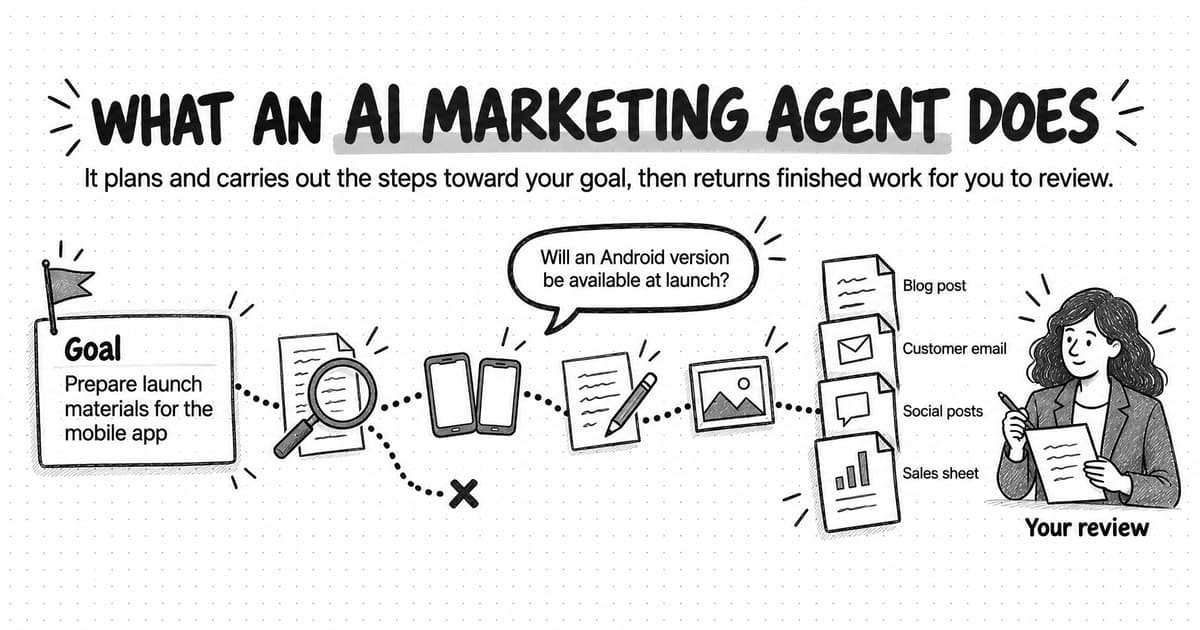
What is an AI marketing agent? A definition with examples
A plain-English definition, the five parts that make one work, examples by marketing job, and five checks for any product sold under the label.
29 min read
Understand what marketing agents can do and how to evaluate them.
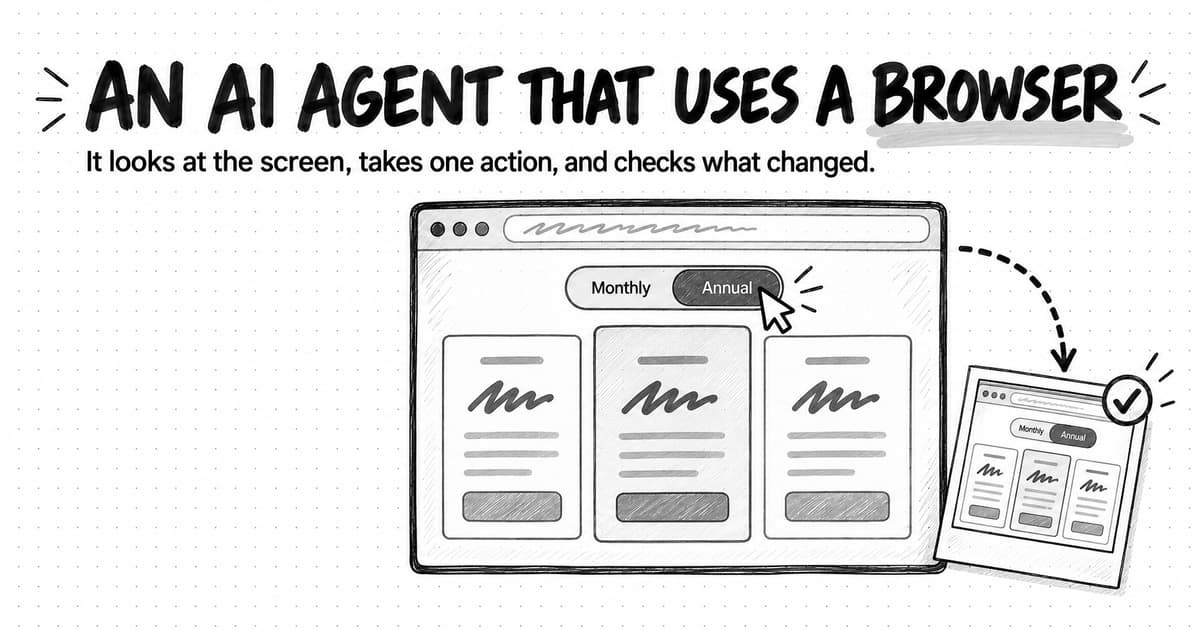
How computer-use agents work, a three-question test for which marketing jobs need one, four worked examples, and the controls, brief template, and checks to use before you trust the result.
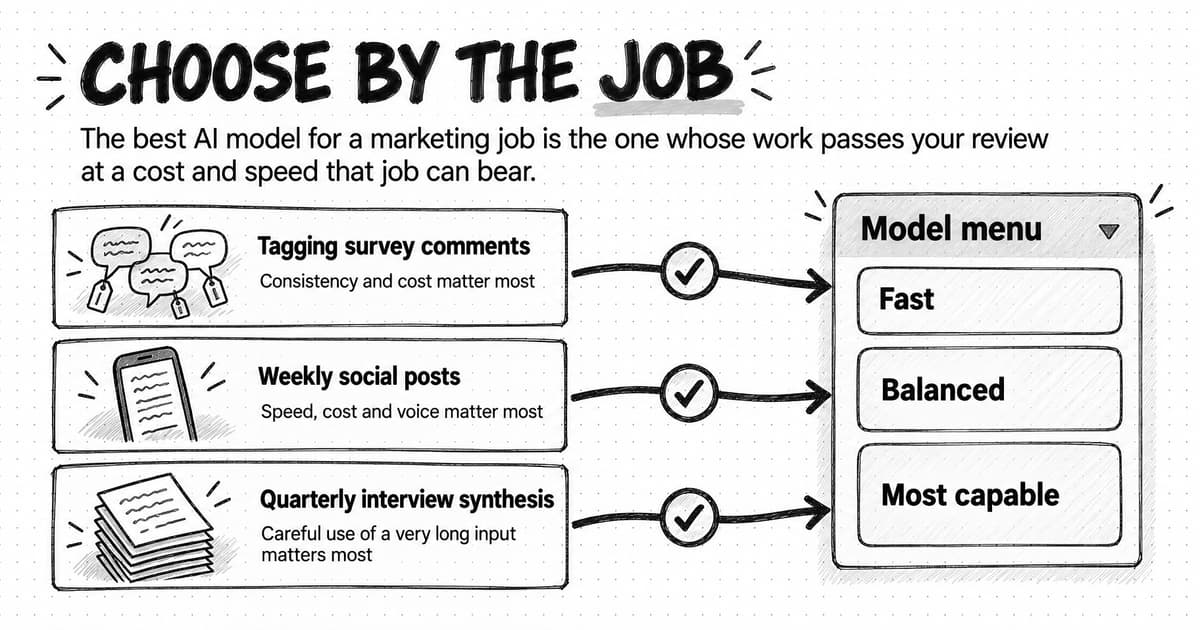
A marketing team's jobs need different things from an AI model, and no leaderboard tests your own briefs. Learn which differences matter, how to match a model to each job and how to test candidates on your work in about an hour.
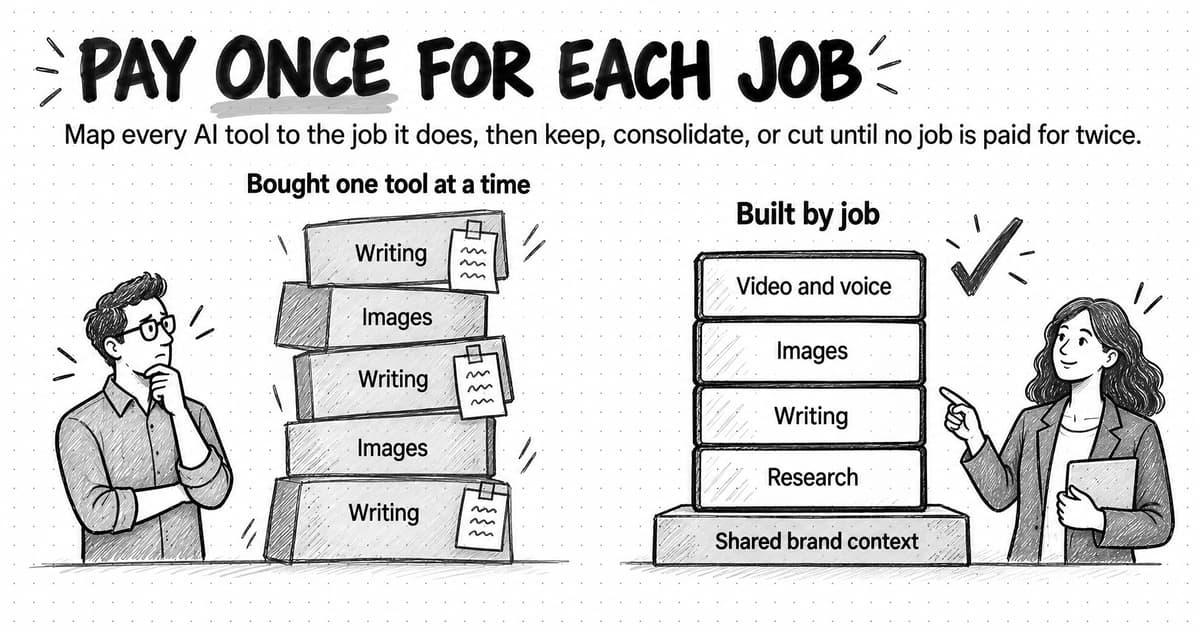
A stack map by marketing job with keep, consolidate, or cut calls, a stack audit worksheet to copy, a buying order for lean teams, and a cost model that counts the time behind every subscription.
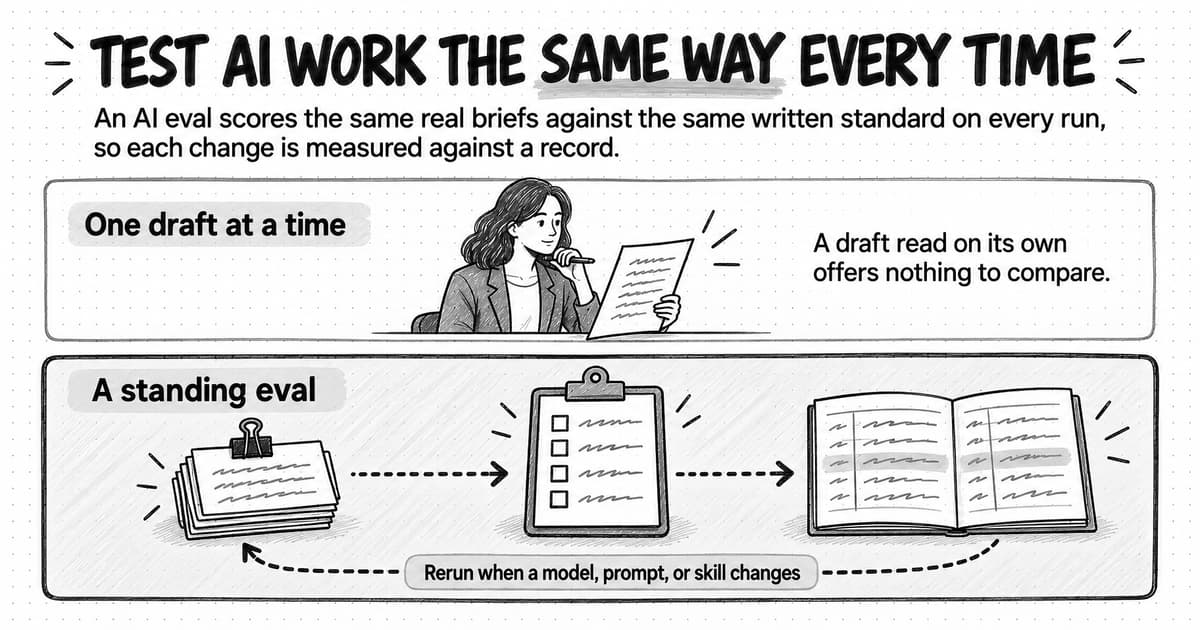
How to build a standing test for your team's AI marketing work: a golden set of real briefs, a rubric two reviewers apply the same way, an AI judge checked for bias, and a rerun after every change. Includes a rubric, scoring sheet, and judge prompt you can copy.
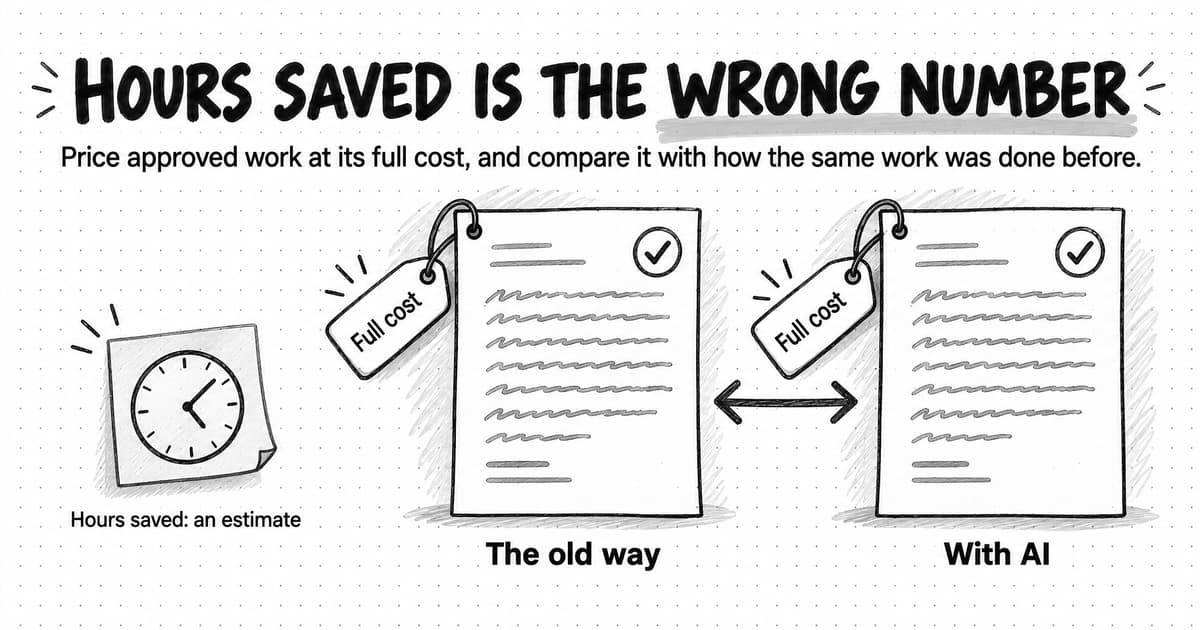
An estimate of hours saved can't show what a marketing team's AI spend returned. Learn to price approved work at its full cost, compare it with a baseline, and report the return as a range, with seven formulas, a worked example, and a one-page report you can copy.
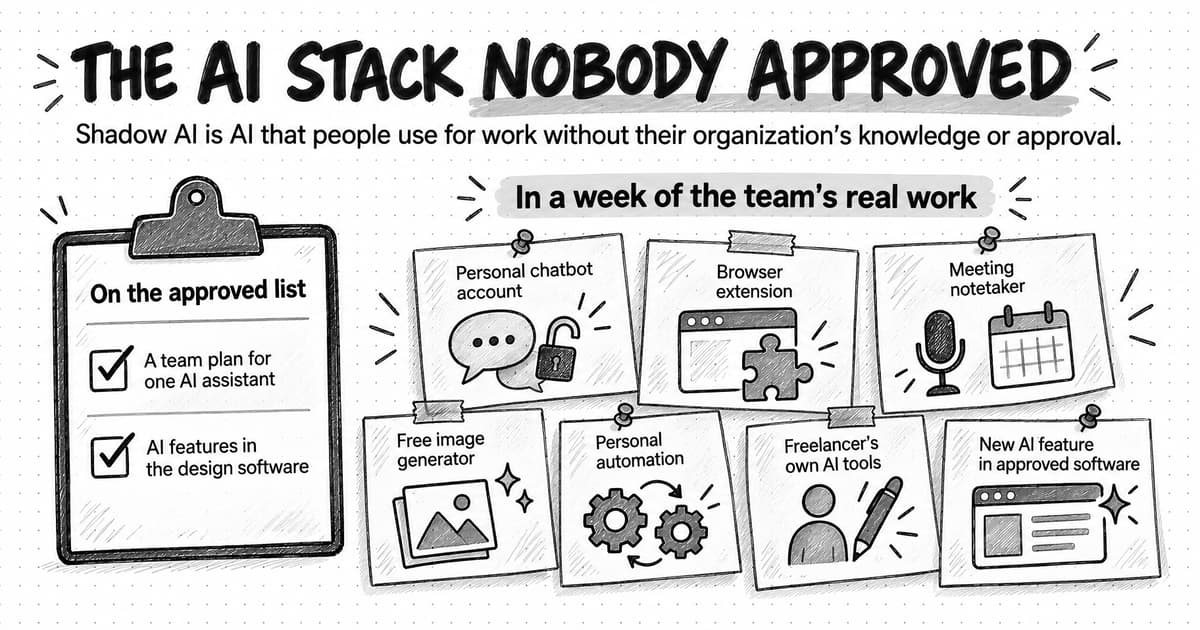
Where unapproved AI hides in a marketing team, the six risks it creates, and a blame-free plan to find it, decide what happens to each tool, and move the work somewhere the whole team can see it.
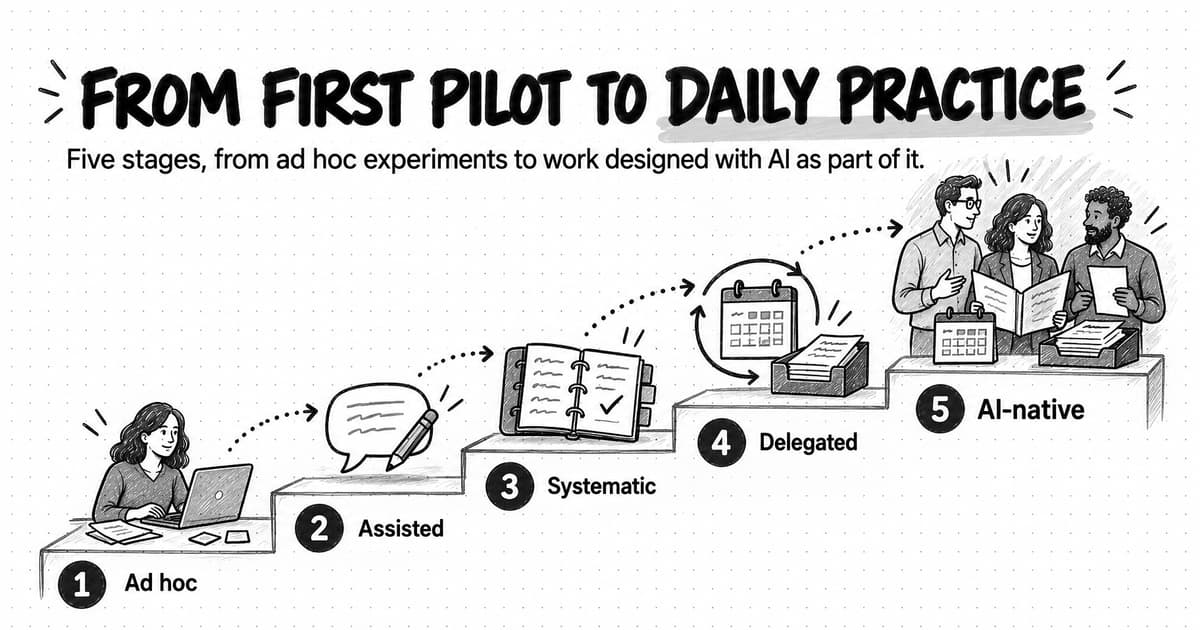
A five-stage model with a readiness self-assessment, the six reasons AI pilots stall and the fix for each, and an operating model that names who owns context, review, recurring work, and quality.
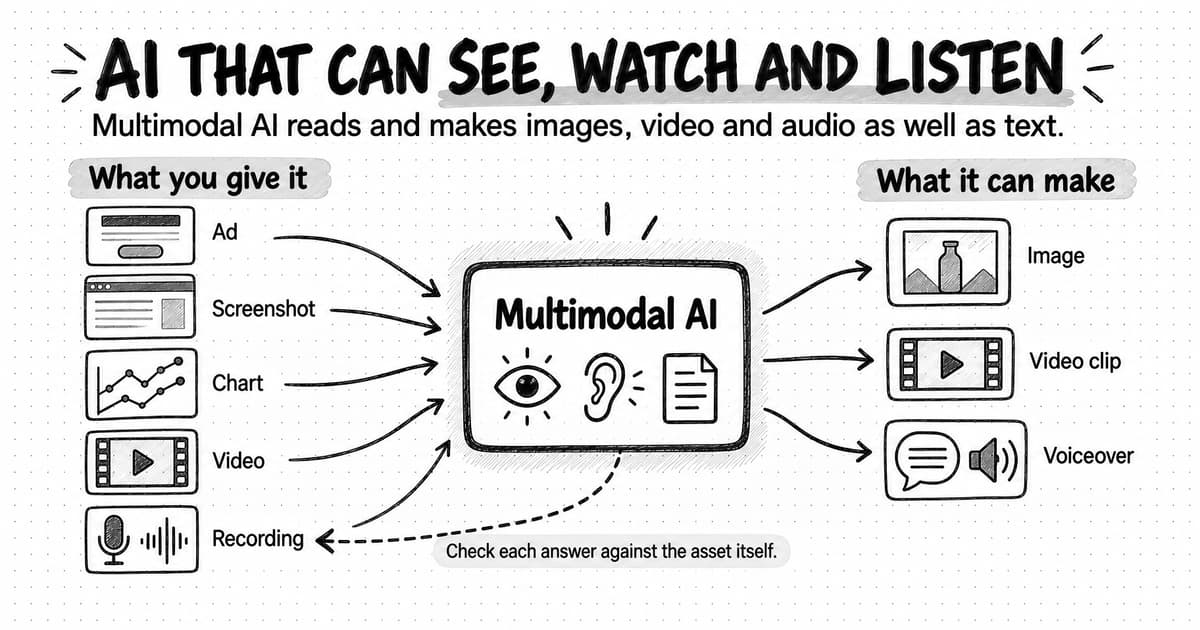
What multimodal AI can read and make, how reliable each is, and which marketing jobs to hand it, with the documented failure modes, a worked launch review, a question template and the consent and disclosure questions that faces and voices raise.
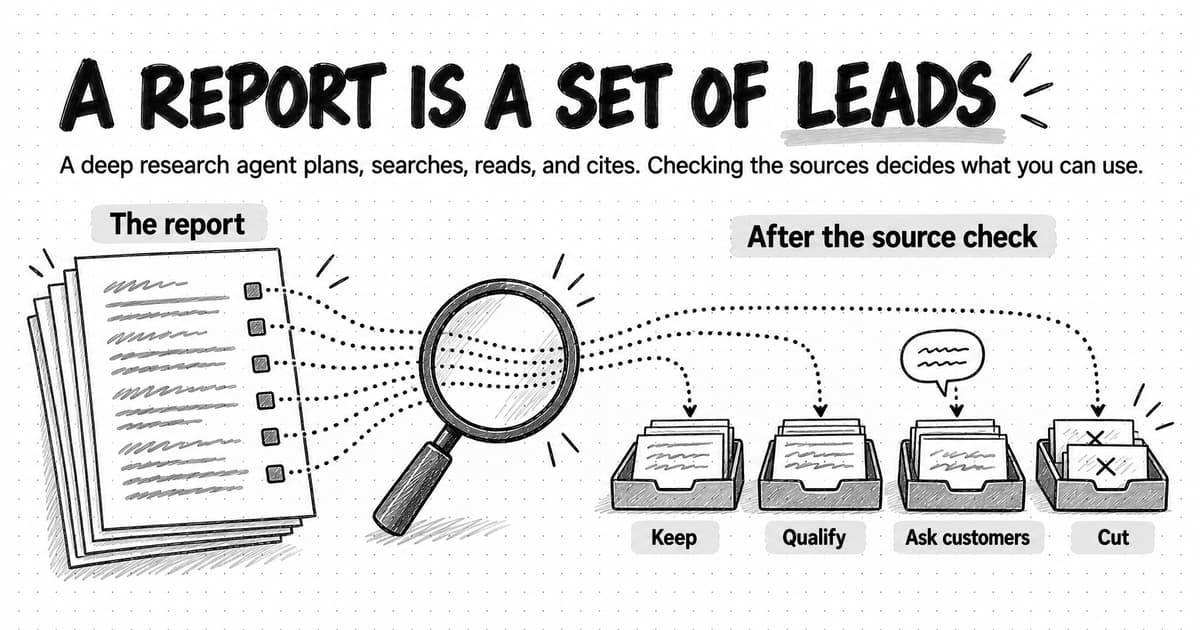
How a deep research agent turns one question into a cited report, where each step of its work can mislead you, and a brief template, a five-step source check and a desk-or-customer test for checking AI market research before you act on it.
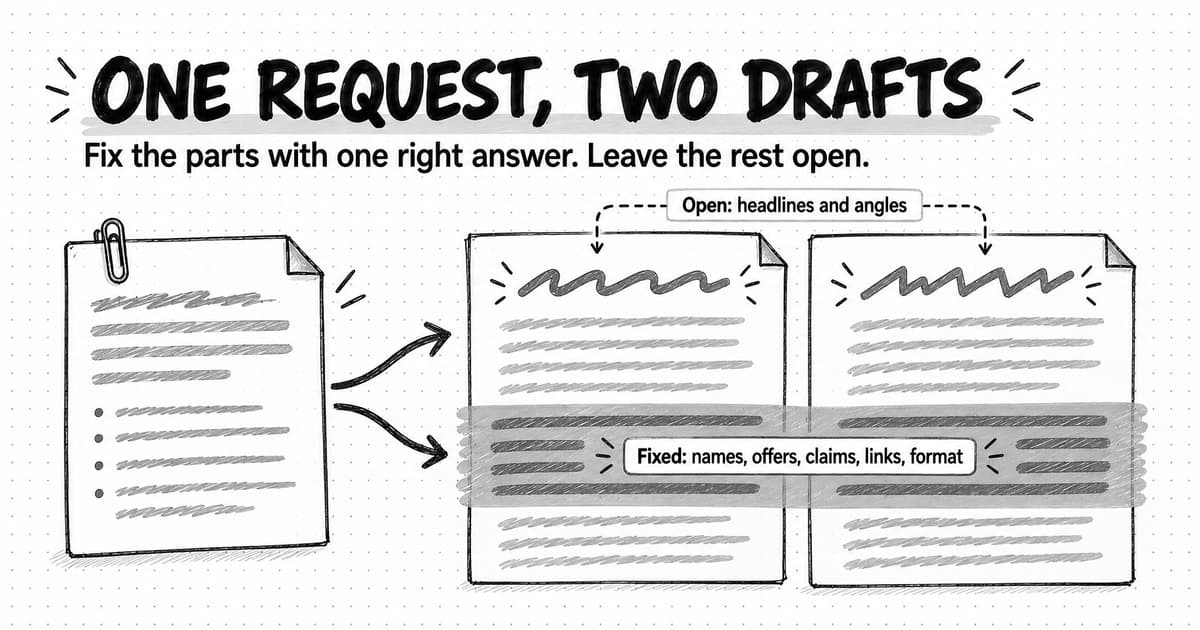
Where the differences between two AI drafts come from, which ones help brand work and which ones hurt it, and the controls that keep names, prices, claims and formats steady, ranked by impact. Includes a fixed-and-open brief you can copy and a worked example.
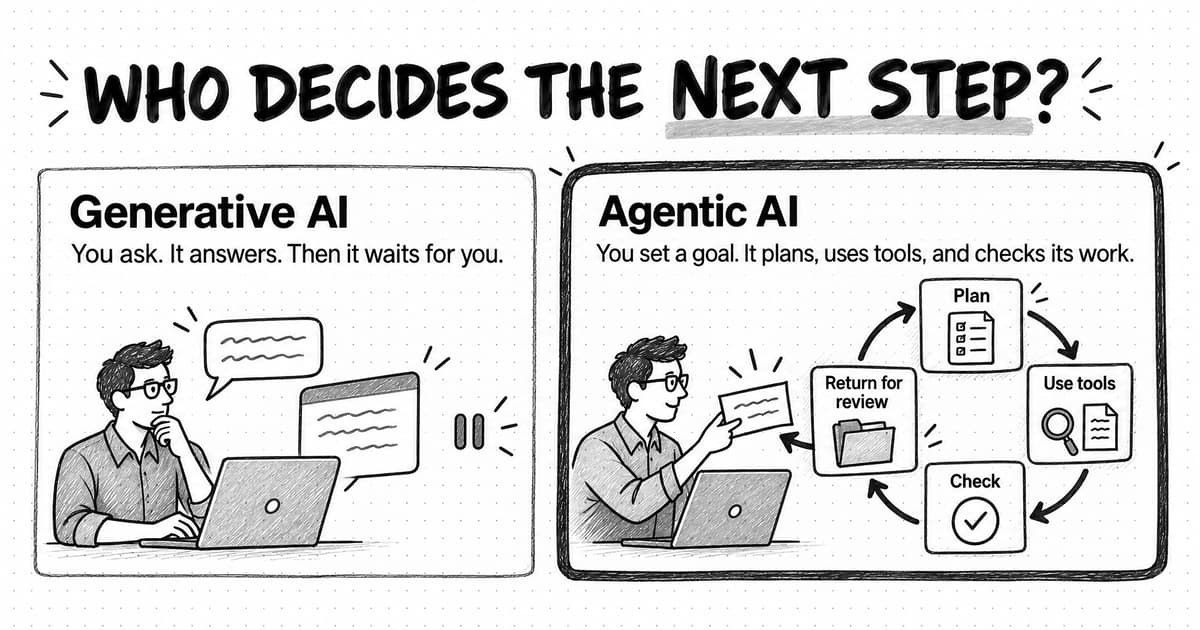
Generative AI drafts what you ask for. Agentic AI takes a goal and works through the steps to reach it. A plain-language comparison for marketers, with one product launch handled three ways.
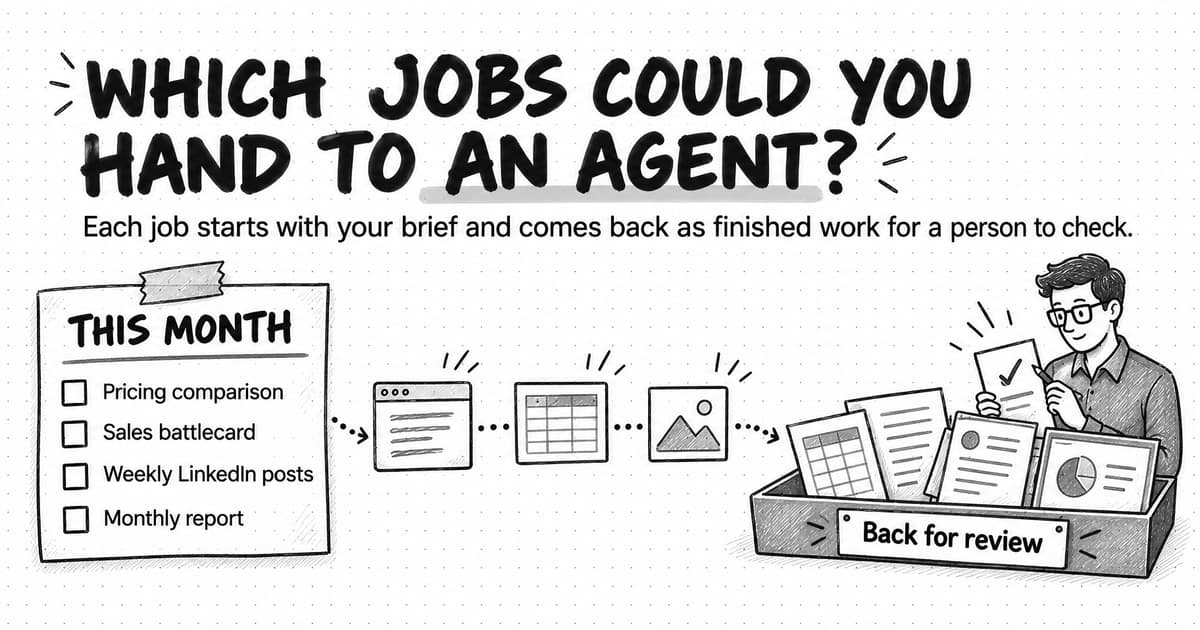
Concrete marketing jobs you can hand to an AI agent, with the brief to give, the deliverable to expect, and the check a person makes before the work is used.
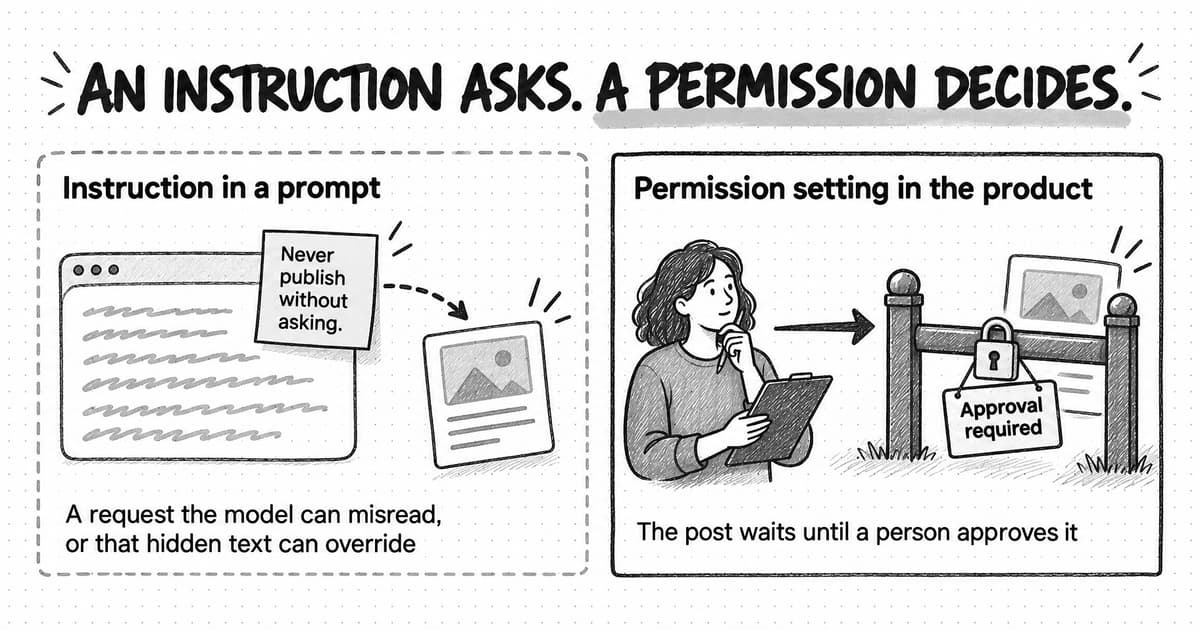
A prompt can ask an AI agent to stay within limits. Permissions, approval steps, spending caps and a short written policy are what make those limits hold.
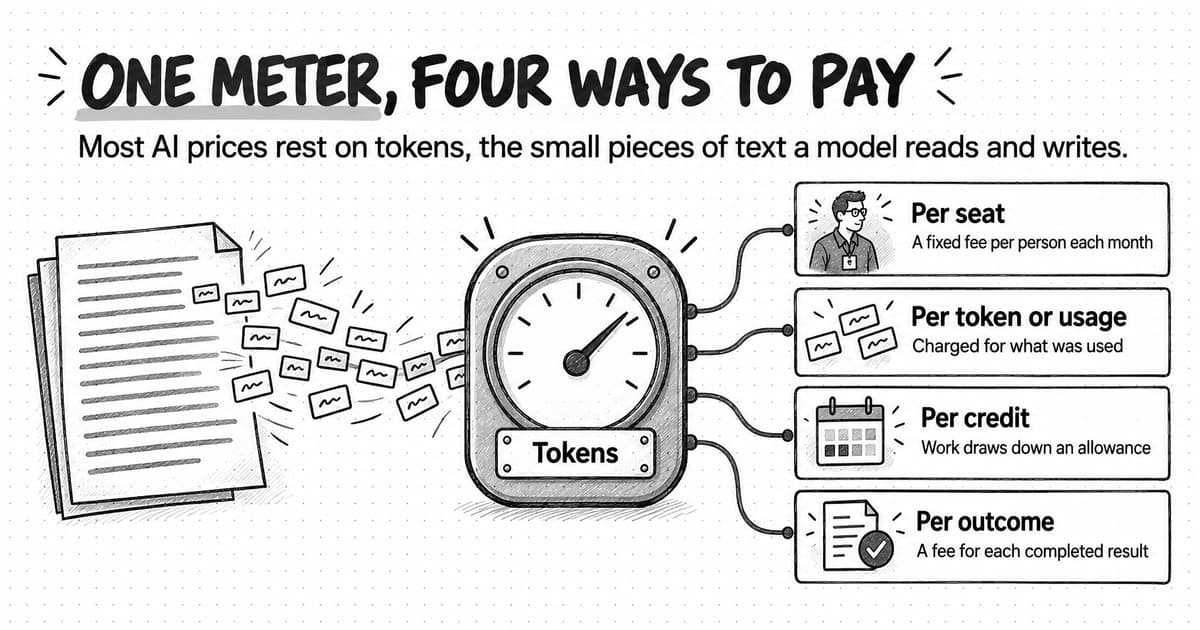
What tokens and credits measure, why agent work uses so many of them, how the four pricing models compare, and how to estimate and cap a month of agent spend.
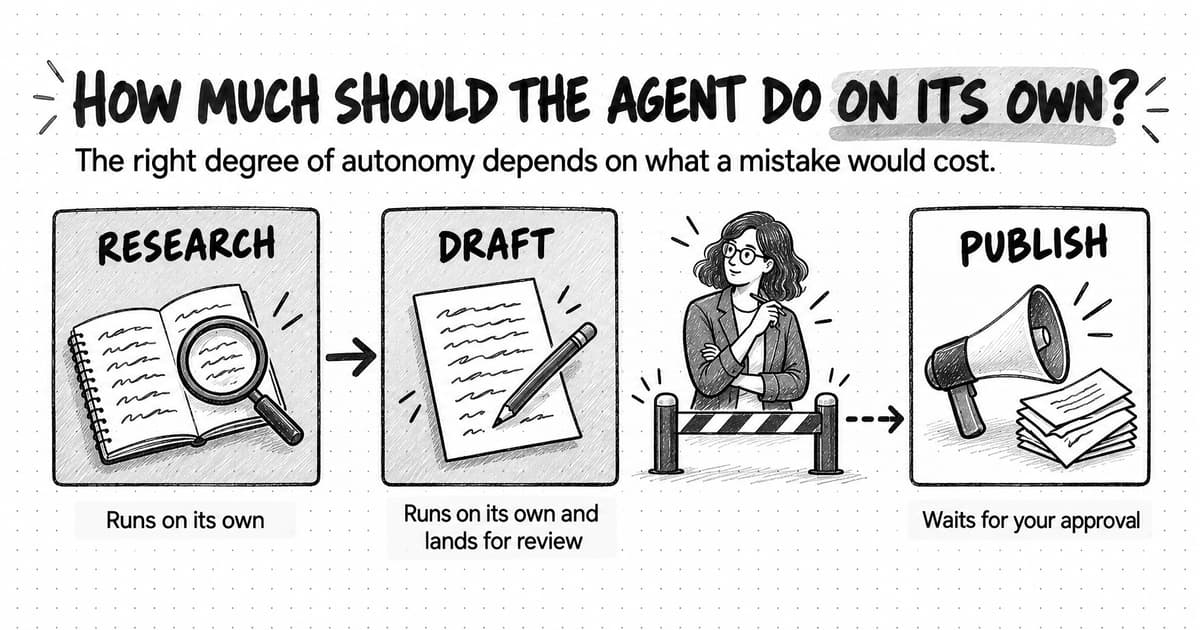
An AI agent's autonomy is something you set for each task. This guide explains the levels, what the evidence says about full autonomy, and a four-question test for deciding which marketing work can run without you.
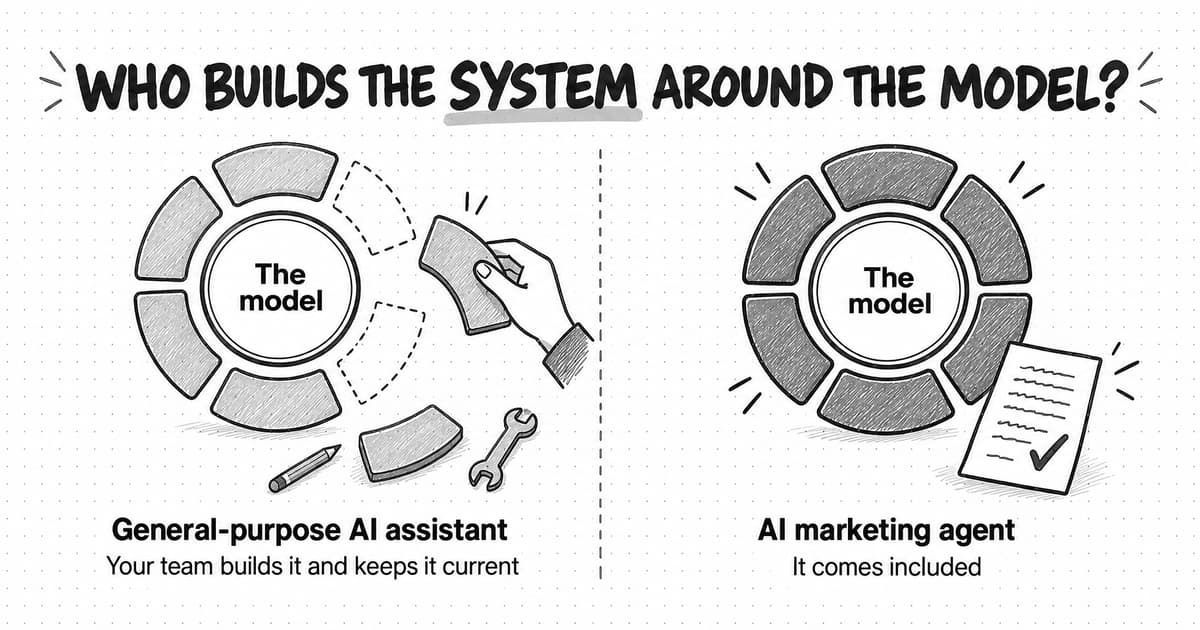
Both can produce capable marketing work. The choice turns on who builds and maintains the brand context, methods, tools, model choices, shared access and recurring work around the model.
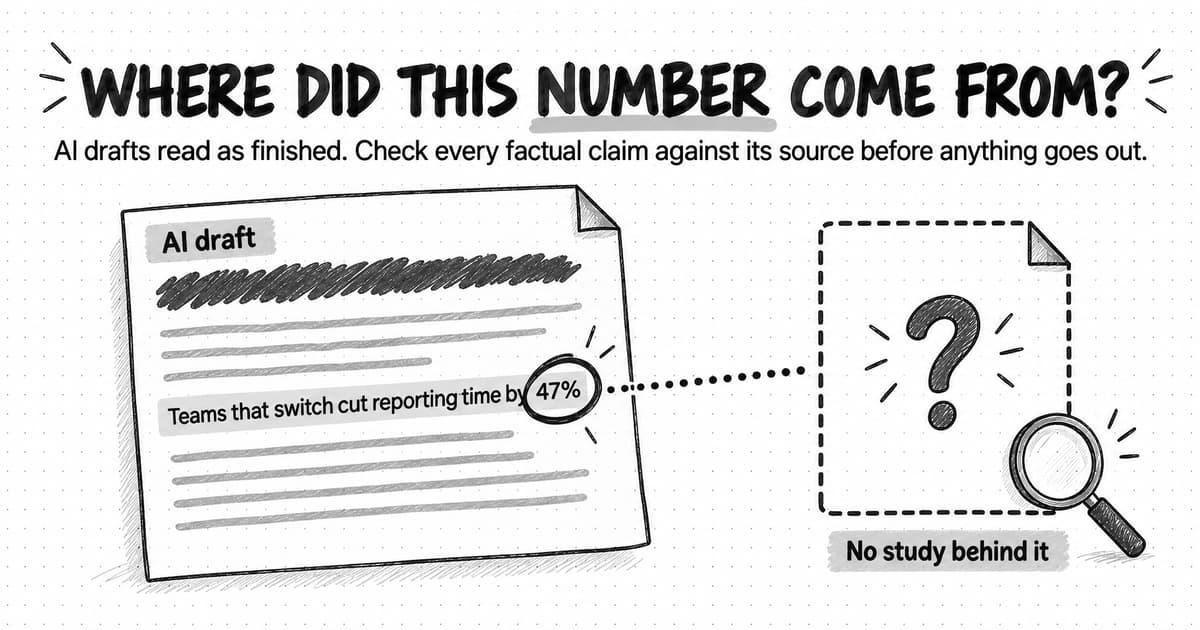
No AI model can promise only true statements. Learn where invented statistics, quotes and citations come from, which ones do the most damage in marketing, and how to keep them out of everything you publish.
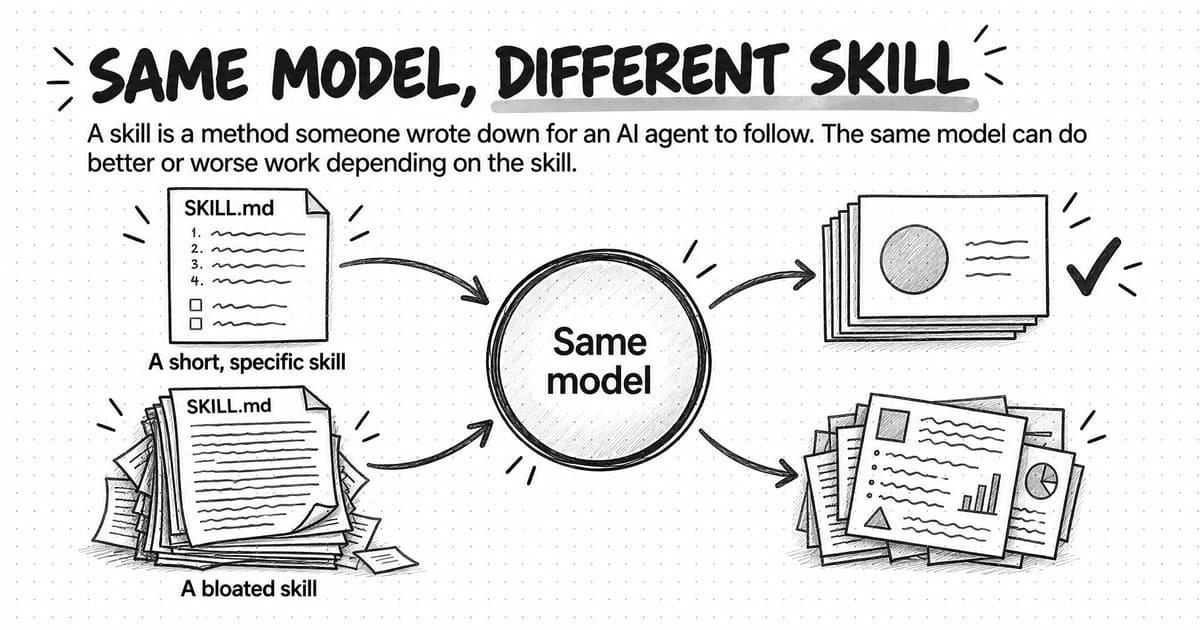
A skill is a method someone wrote down for an AI agent to follow. How skills load, what a good marketing skill contains, how they differ from prompts, tools and MCP, and how to judge them in a product.
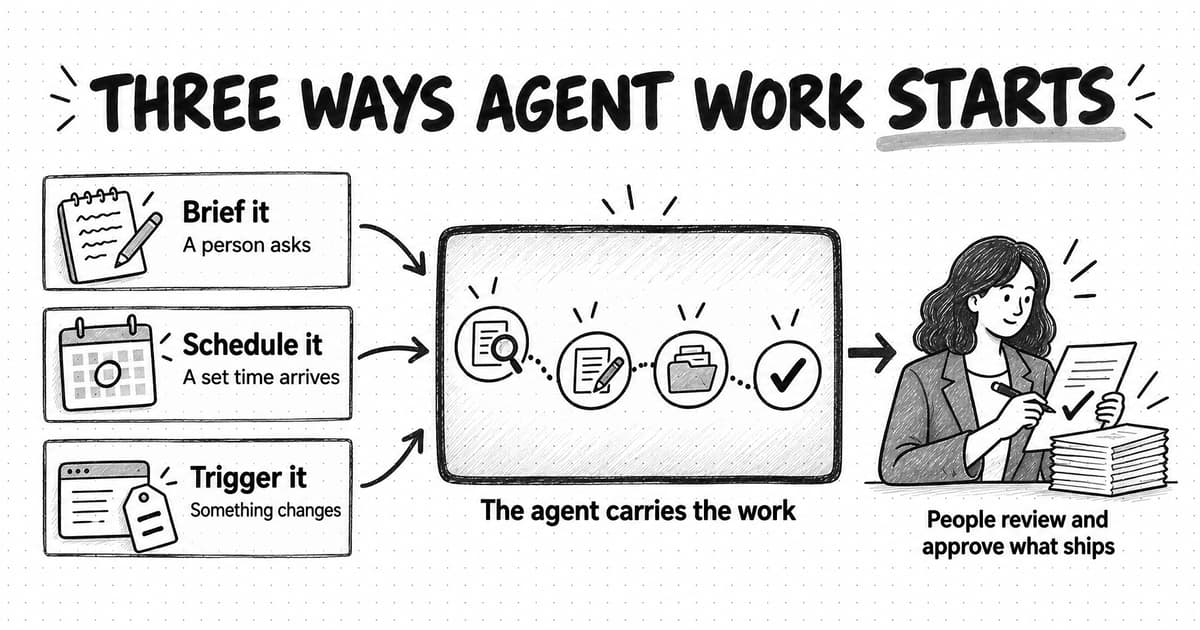
A plain-English definition, a simple model for the three ways agent work starts, and what changes for a marketing team while people keep direction, taste, and approval.

What an AI agent can keep between jobs, what your brand memory should hold and leave out, and a five-step routine for keeping saved facts current.
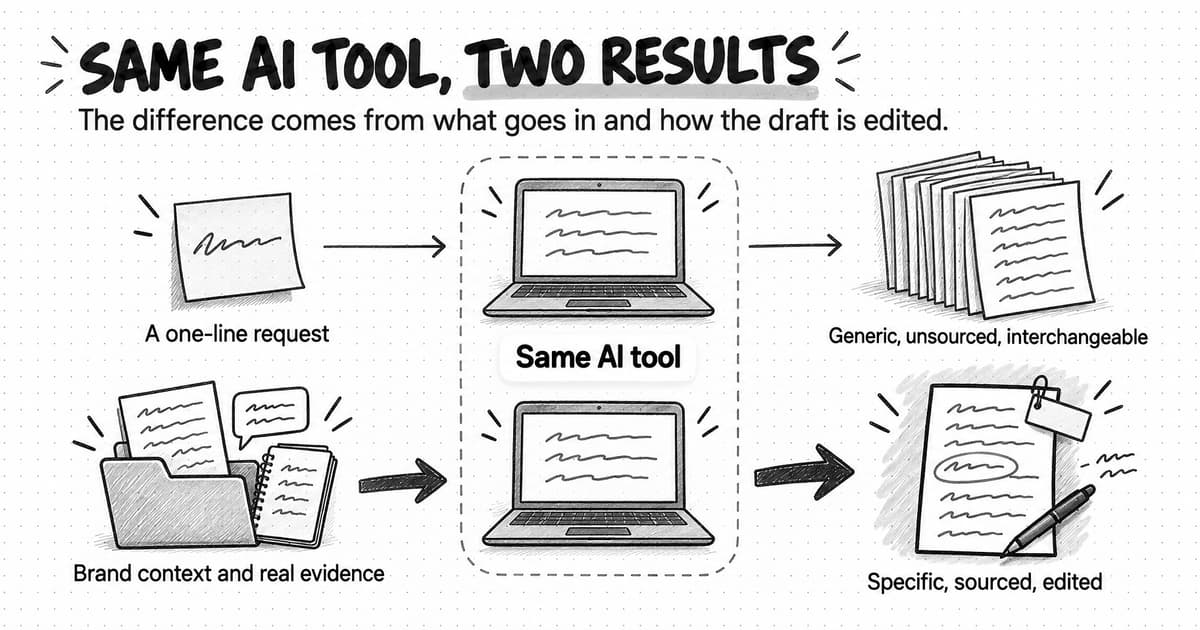
Why polished AI content can still waste a reader's time, how to recognize it in your own marketing, and an editing process that keeps AI-assisted work specific to your brand.
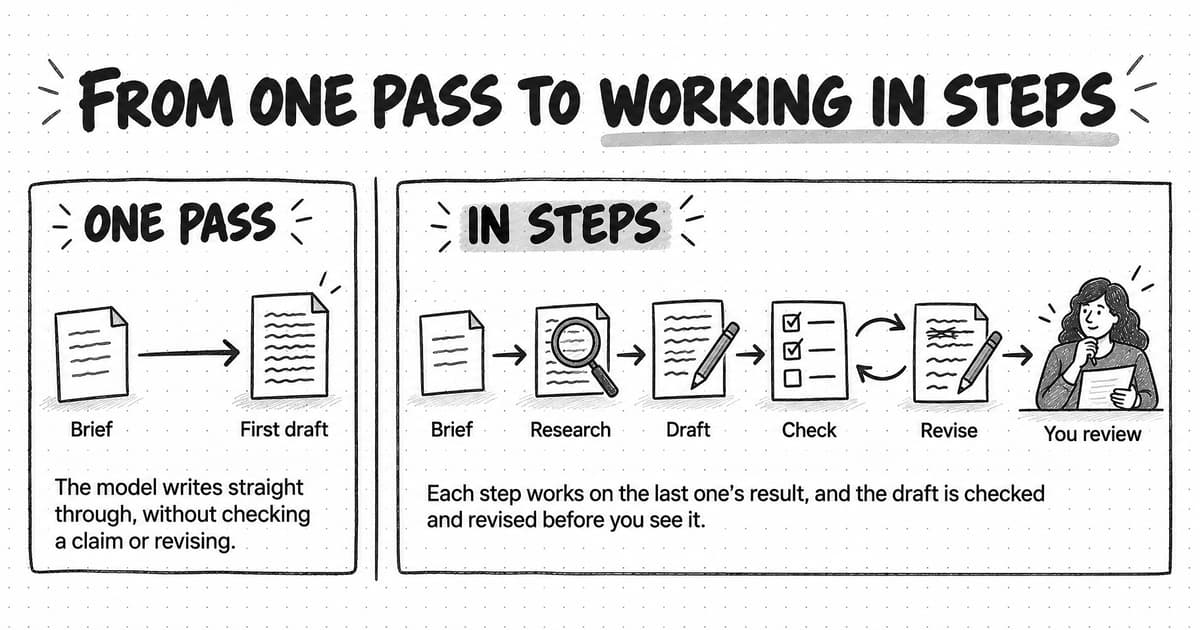
An agentic workflow lets AI work through a job in steps, checking and revising along the way. Here's how those steps can be arranged, a marketing illustration of each arrangement, and where a person should check the work.
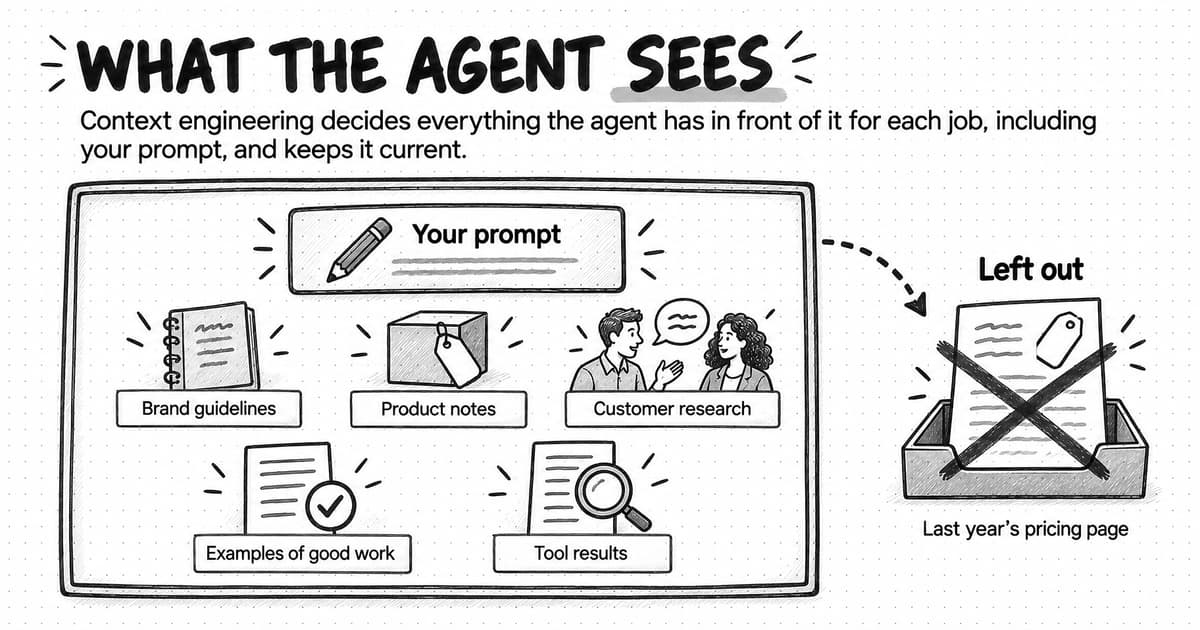
A clear prompt tells an AI agent what you want. Context engineering covers what the agent knows as it works: which brand facts, evidence and examples each job needs, where they live, and who keeps them current.
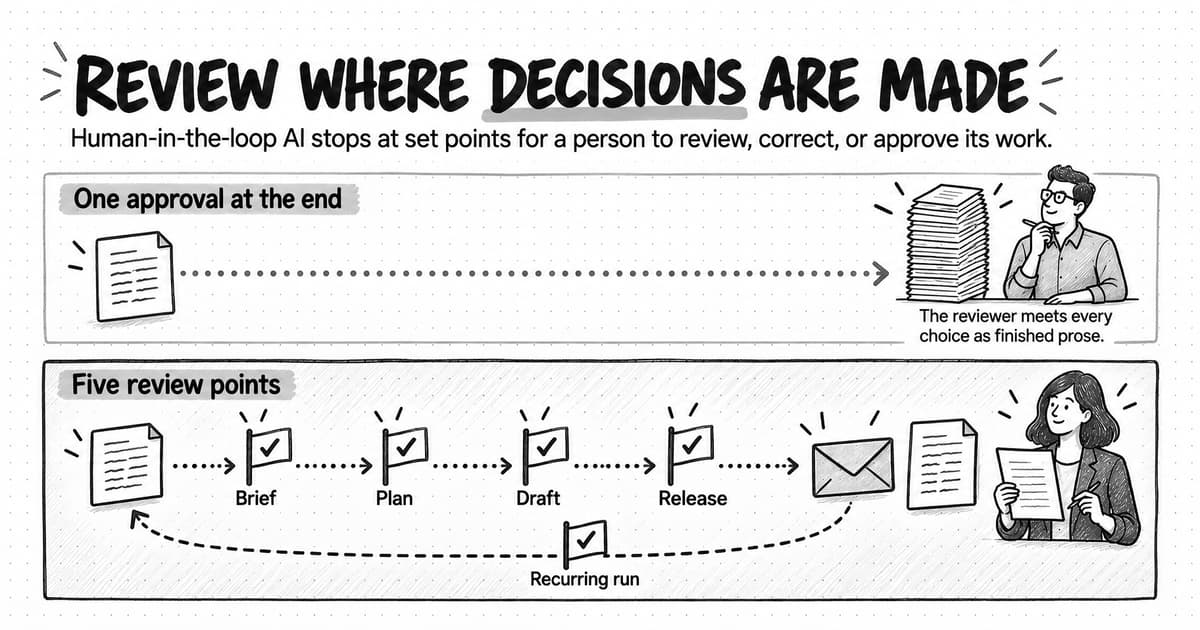
Five review points for AI marketing work, who should own each one, how deep each check should go, and how to keep approvals from becoming a formality.
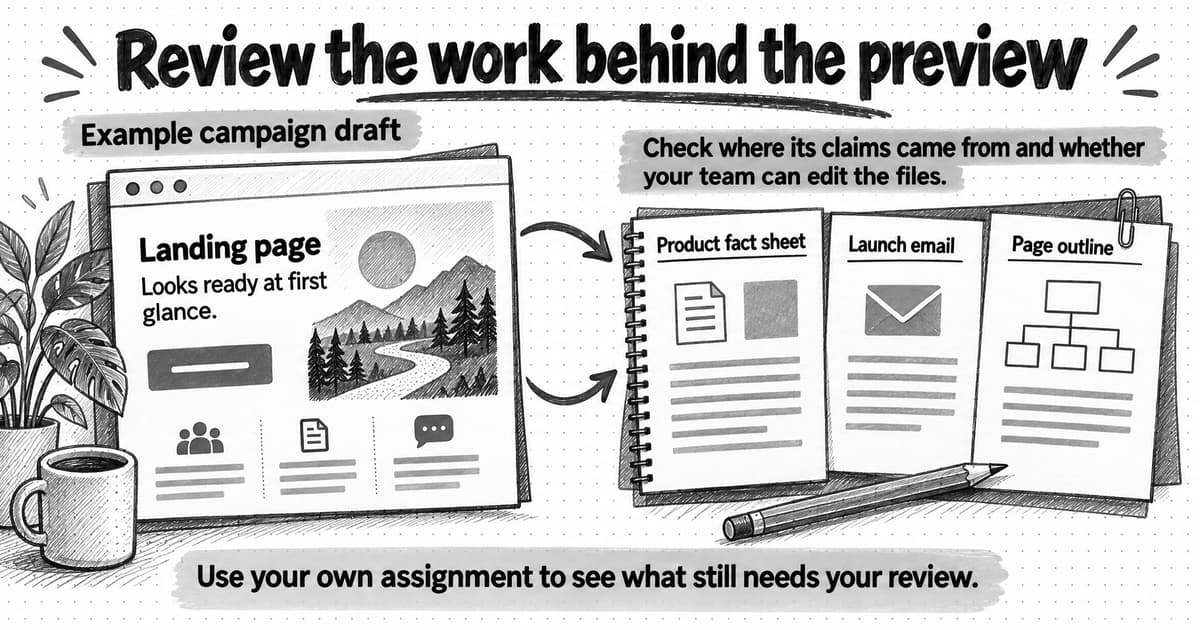
Find out whether an agent can do the marketing work you need, how much review its work requires, and what to try before giving it more responsibility.
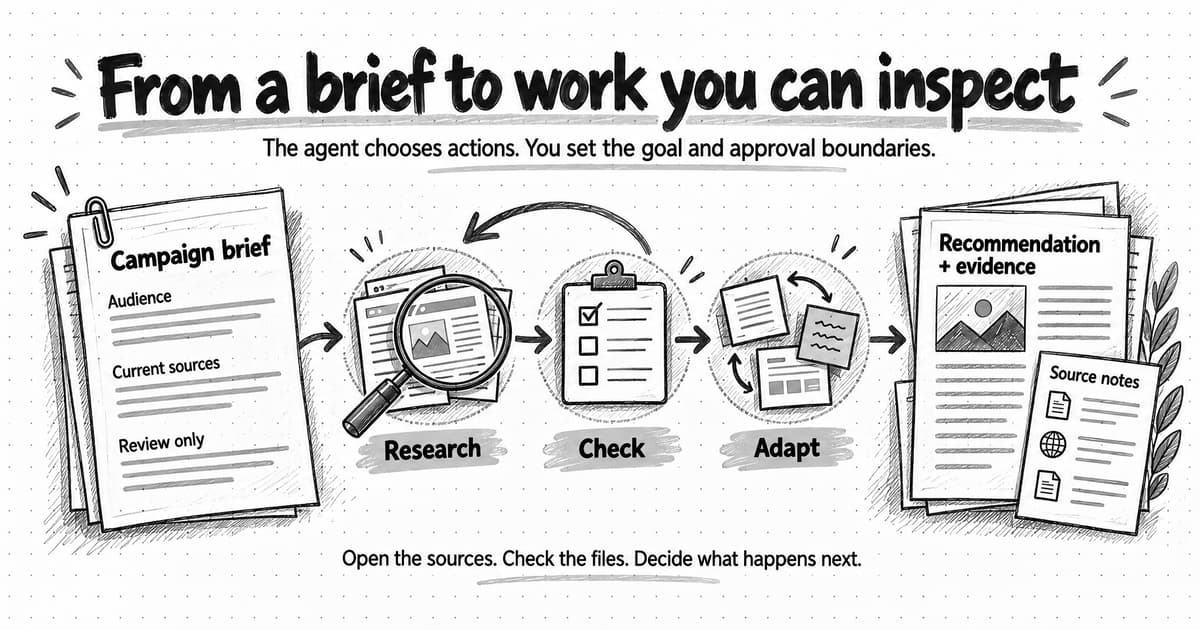
What happens between your brief and the finished work? A plain-English guide to the parts of an AI agent, with a marketing example to connect them.
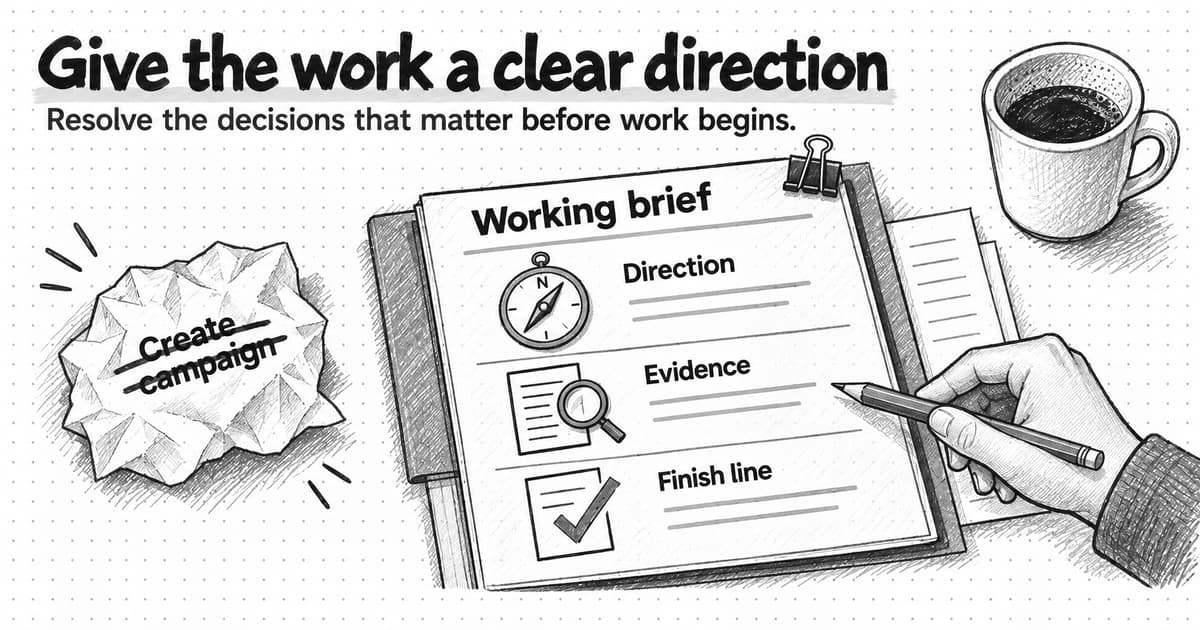
A useful agent prompt is less like a magic phrase and more like a good creative brief: clear about the outcome, grounded in source material, and explicit about what needs your approval.
From Ampere
Ampere is your brand-aware AI marketing agent. It works from your saved brand memory to research, create, and package marketing work — you keep direction and approval.
No card required